
Snare Drum
A snare drum has wires or guts fixed normally to the bottom head on a drum.

Study Percussion – Master Section Framework
1. Introduction
-
What is this area of percussion?
-
Why is it important?
-
Who is this section for?
The snare drum is one of the most recognized and widely performed instruments in the percussion family. Its distinctive sound comes from a set of metal or synthetic wires, called snares, stretched across the bottom head of the drum. When the top head is struck, the snares vibrate against the bottom head, producing the crisp, articulate sound that defines the instrument.
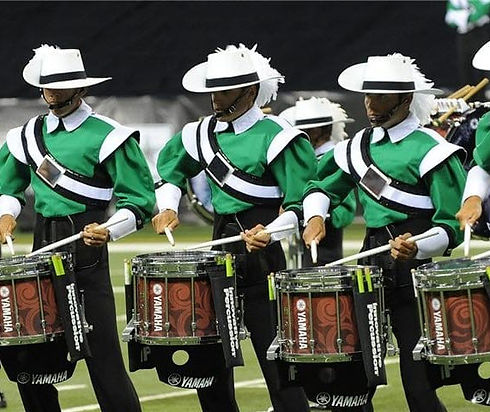
Today, the snare drum is found in concert bands, orchestras, marching bands, drum corps, drum set performance, chamber ensembles, military bands, recording studios, and countless musical traditions throughout the world. Whether you are a beginning percussionist or an experienced performer, the snare drum provides the technical foundation for nearly every area of percussion performance.
This section of Study Percussion is designed to introduce the instrument while providing exercises, instructional videos, downloadable resources, and additional materials to help you continue developing your skills.
2. History
-
Origins
-
Development over time
-
Significant milestones
The history of the snare drum stretches back hundreds of years. Early versions developed from military side drums used throughout Europe to communicate commands across the battlefield. Before electronic communication, drummers used rhythmic patterns to organize troop movement, relay instructions, and maintain marching tempo.
As music evolved, the snare drum found its way into orchestras, concert bands, and eventually jazz, popular music, drum set performance, and modern marching percussion. Throughout its history, improvements in drum construction, drumheads, hardware, and performance techniques have transformed the instrument into one of the most versatile members of the percussion family.
Today the snare drum continues to evolve through contemporary composition, education, marching arts, solo performance, and advances in instrument design.
3. The Instrument Today
-
Modern performance
-
Educational use
-
Professional applications
-
Current trends and developments
The modern snare drum serves many different musical roles. It provides precision, rhythmic clarity, dynamic contrast, and expressive possibilities across virtually every musical style.
Snare drums are used by concert percussionists, orchestral musicians, drum set performers, marching ensembles, military bands, recording artists, educators, and solo performers. New compositions continue to expand the instrument’s musical vocabulary while educators develop new teaching methods that make percussion more accessible than ever before.
The snare drum remains one of the most important instruments for developing rhythm, coordination, timing, technique, and musical expression.
4. The Instrument
-
Anatomy and construction
-
Instrument variations
-
Components and terminology
Although snare drums come in many sizes and designs, they all share common components. A typical snare drum consists of a shell, top and bottom drumheads, hoops, tension rods, lugs, a snare strainer, butt plate, and a set of snares beneath the bottom head.
Different shell materials—including wood, steel, brass, aluminum, acrylic, and composite materials—produce unique tonal characteristics. Variations in shell depth, diameter, bearing edges, drumheads, and snare wires allow performers to choose instruments appropriate for specific musical situations.
Understanding how these components work together helps performers select, tune, and maintain their instruments.
5. Equipment
-
Sticks, mallets, beaters
-
Cases and stands
-
Accessories
-
Maintenance essentials
Selecting the proper equipment is an important part of successful snare drum performance. Drumsticks, practice pads, stands, cases, drumheads, and maintenance supplies all contribute to a positive learning experience.
As students develop, they often discover that different musical situations require different types of sticks, drumheads, or accessories. Learning how to select and care for equipment helps protect your investment while improving consistency and performance.
This section will continue to grow with equipment guides, product recommendations, maintenance tips, and purchasing advice.
6. Basic Technique
-
Fundamental playing concepts
-
Sound production
-
Body mechanics
-
Essential skills
Strong technique forms the foundation of successful percussion performance. Proper posture, relaxed movement, balanced grip, stroke development, sound production, and consistent practice habits all contribute to efficient playing.
Rather than relying on excessive tension or strength, successful performers develop control through relaxed, repeatable motion. Building these habits early allows musicians to perform more advanced literature with confidence and musicality.
This section includes instructional materials designed to help students develop sound technical fundamentals that can be applied throughout their percussion studies.
7. Practice
-
Exercises
-
Videos
-
PDFs
-
Practice strategies
-
Progressive learning materials
Consistent, thoughtful practice produces lasting improvement. Effective practice is not simply repeating exercises—it involves careful listening, problem solving, goal setting, and gradual development over time.
Within this section you will find exercises, rudiments, instructional videos, downloadable PDFs, practice guides, and progressive learning materials designed to support musicians at every stage of development.
Whether you are preparing for an audition, improving your reading skills, or simply developing stronger fundamentals, regular practice remains the key to long-term success.
8. Literature & Repertoire
-
Solo literature
-
Ensemble literature
-
Standard repertoire
-
Recommended listening
The snare drum has an extensive body of educational and performance literature. Students begin with elementary studies and gradually progress through etudes, solos, orchestral excerpts, chamber music, and contemporary works.
Exploring a variety of musical styles helps develop technical ability, musical understanding, and artistic expression. Listening to outstanding performers while studying quality literature provides valuable insight into interpretation, phrasing, tone, and performance practice.
Future additions to this section will include recommended solos, method books, recordings, and listening resources.
9. Resources
-
Books
-
Organizations
-
Manufacturers
-
Educational materials
-
Related Study Percussion pages
-
Additional references
Study Percussion is intended to serve as a growing educational resource for percussionists, teachers, students, and lifelong learners.
Throughout this section you will find books, organizations, manufacturers, educational materials, videos, downloadable resources, and links to related areas of Study Percussion. As the website continues to expand, additional articles, historical information, instructional materials, and multimedia resources will be added to support continued learning.
Learning percussion is a lifelong journey. We hope these resources encourage curiosity, inspire continued practice, and help you build a deeper understanding of the art and craft of percussion performance.


Rudiments
Single Stroke Four - Video - PDF
Single Stroke Seven - Video - PDF
Single Stroke Roll - Video - PDF
Double Stroke Roll - Video - PDF
Triple Stroke Roll - Video - PDF
Multiple Bounce Roll - Video - PDF
Five Stroke Roll - Video - PDF
Six Five Stroke Roll - Video - PDF
Seven Five Stroke Roll - Video - PDF
Nine Five Stroke Roll - Video - PDF
Ten Five Stroke Roll - Video - PDF
Eleven Five Stroke Roll - Video - PDF
Twelve Five Stroke Roll - Video - PDF
Thirteen Stroke Roll - Video - PDF
Seventeen Stroke Roll - Video - PDF
Single Paradiddle - Video - PDF
Double Paradiddle - Video - PDF
Triple Paradiddle - Video - PDF
Paradiddle-diddle - Video - PDF
Single Flammed Mill - Video - PDF
Flamadiddle-diddle - Video - PDF
Swiss Army Triplet - Video - PDF
Inverted Flam Tap - Video - PDF
Drag - Video - PDF
Single Drag Tap - Video - PDF
Double Drag Tap - Video - PDF
Lesson 25 - Video - PDF
Drag-a-diddle - Video - PDF
Drag Paradiddle 1 - Video - PDF
Drag Paradiddle 2 - Video - PDF
Single Ratamacue - Video - PDF
Double Ratamacue - Video - PDF
Triple Ratamacue - Video - PDF
Four Types of Rolls - Video -
Repertoire
On the way!
